I still remember the day the v4.4 update dropped. Like millions of other players, I was excitedly scrolling through the patch notes, eager to discover new cosmetics and gameplay tweaks. Among the additions was a card item with a grandiose name: “Hand of the Almighty.” At first glance, I assumed it was just another mythical-themed collectible, perhaps referencing some in-game lore. Little did I know that within hours, that small piece of digital content would erupt into a massive firestorm of religious sensitivity, community outcry, and a swift corporate apology.
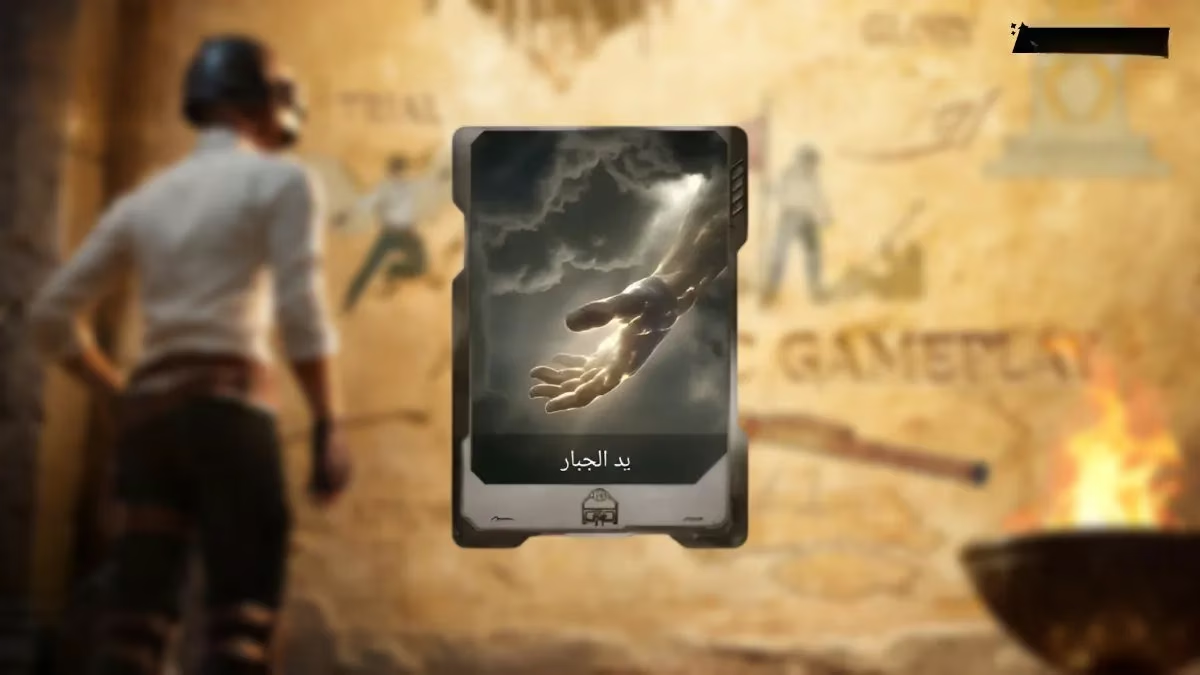
As I logged into the servers, my friends' chat was already buzzing. Some were intrigued by the design, but one of my squadmates, a devout Muslim from Saudi Arabia, was genuinely upset. “They can't use that term,” he said, voice tight. “It’s not just a word; it’s tied to the sacred attributes of Allah. You can’t turn something that profound into a game prop.” Initially, I didn’t grasp the depth of his hurt. To me, “almighty” was a generic English adjective meaning all-powerful, like something you’d find in a superhero comic. But listening to him and scrolling through heated discussions on Twitter and Discord, I began to understand. For many Muslims, the Almighty is one of the divine epithets, a name that carries immense reverence. Placing it on a disposable virtual card felt, to them, like a trivialization of the sacred.
The backlash grew exponentially. Muslim players from across the Middle East and beyond condemned the item's naming, emphasizing that their call for removal wasn’t an attack on the game but a plea for respect. One trending tweet read: “We love PUBG Mobile, but our faith comes first. Rename or remove the item out of consideration for our religious sentiments.” The conversation wasn’t monolithic, though. Within the Muslim community itself, voices of dissent emerged. Some players argued that “Almighty” is a broad, nonspecific reference to God and not exclusively Islamic. They warned that yielding to the pressure set a dangerous precedent, opening the floodgates for future controversies over even minor perceived slights. These internal debates only amplified the noise, making it clear that religious interpretation is deeply personal and far from uniform.
Nevertheless, Tencent Games and PUBG Mobile moved with surprising speed. On May 12, 2026, an official statement appeared on their social channels. The message was somber and direct: “We deeply regret the hurt and anguish caused by the ‘Hand of the Almighty’ item. It has been removed from the game immediately. We apologize sincerely and reaffirm our commitment to respecting all beliefs.” I watched as the community’s anger simmered into cautious approval. The item was scrubbed from inventories and the store overnight, a rare instance where a billion-dollar corporation prioritized sensitivity over a potential monetization stream.
This wasn’t PUBG Mobile’s first encounter with religious controversy. A few of my veteran squadmates reminded me of the 2020 incident during the Mysterious Jungle mode. Back then, certain environmental elements and symbols sparked criticism in Kuwait and Saudi Arabia, leading to a similar apology and adjustments. History, it seems, has a way of repeating itself, especially in a global game that serves over a billion players with wildly diverse cultural and spiritual backgrounds.
Reflecting on the whole saga, I’ve come to realize that developers walk an impossible tightrope. No matter how innocent the intention— and I truly believe the designers simply reached for a dramatic-sounding title— you can never predict how any group will interpret your creations. For many, faith isn't just an abstract concept; it’s woven into their identity. When a game inadvertently touches that nerve, reactions are instantaneous and visceral. I spoke to my Saudi friend again after the removal. He was relieved, but also tired. “We don’t want to censor creativity,” he explained. “We just want game studios to consult, to hire cultural advisors, to recognize that words carry weight. When you use a term tied to the divine, you’d better treat it with the awe it deserves, or not use it at all.”
In the end, the Hand of the Almighty vanished, replaced by a void that serves as a quiet reminder. It reminded me that the gaming world isn’t a separate realm disconnected from reality. Every pixel we interact with exists within a tapestry of human emotions, politics, and sacred traditions. As PUBG Mobile moves forward with future updates— like the recent Harley-Davidson collaboration or the anime-fueled Blue Lock event— I hope the lesson continues to resonate. Inclusivity isn't just about adding flags and languages; it’s about understanding the soul of your audience, one word at a time. And sometimes, that means admitting you made a mistake, wiping the slate clean, and pressing start anew.
What do you think? Should games avoid any reference to real-world religious terminology, or is context everything? 🎮🤔