In the ever-shifting landscape of gaming subscriptions, Microsoft's Xbox Game Pass has consistently pushed the envelope, offering a vast digital library for a monthly fee. As of 2026, looking back at pivotal moments like the X018 event highlights the service's foundational strategy: a compelling mix of blockbuster titles, critically acclaimed indies, and powerful first-party offerings. This approach not only attracted new subscribers with irresistible offers but also solidified the value for existing members through continuous expansion and innovative features. The addition of 16 diverse games at that time was a clear statement of intent, blending genres and development scales to cater to every type of gamer. It showcased a future where the barrier to experiencing a wide array of games was lower than ever, a principle that has only been amplified in the years since.
The marquee addition at that juncture was undoubtedly PlayerUnknown's Battlegrounds (PUBG). While its dominance in the battle royale scene had been challenged by newer contenders, its inclusion was a masterstroke. It brought a cultural phenomenon directly to subscribers, allowing millions to drop into its tense, last-player-standing matches without an additional purchase. For many, it was the first taste of the genre that would define a generation of multiplayer gaming. The game's legacy, as part of Game Pass, served as a gateway, demonstrating how the service could democratize access to major online experiences.
Another heavyweight joining the roster was Hellblade: Senua's Sacrifice from Ninja Theory. Its arrival felt almost inevitable following Microsoft's acquisition of the studio, a move that previewed the tech giant's strategy of bringing developmental talent in-house to fuel Game Pass. Hellblade was more than just a game; it was an intense, narrative-driven journey that blended psychological horror with deep character study. Offering it through the subscription allowed players to experience its harrowing and beautiful world, which was praised for its representation of mental health, without hesitation. This title exemplified the service's role in promoting artistic, boundary-pushing experiences alongside mainstream hits.
On the horizon, the announcement of Ori and the Blind Forest and its then-upcoming sequel, Ori and the Will of the Wisps, signaled a strong commitment to first-party content. As beloved Microsoft Studio titles, their placement in Game Pass was a no-brainer, guaranteeing that subscribers would have day-one access to some of the most beautifully crafted platformers ever made. The lush visuals, emotional storytelling, and tight gameplay of the Ori series became staple recommendations for anyone exploring the service's catalog. It perfectly illustrated the long-term value proposition: major exclusive titles would be a core pillar of the library.
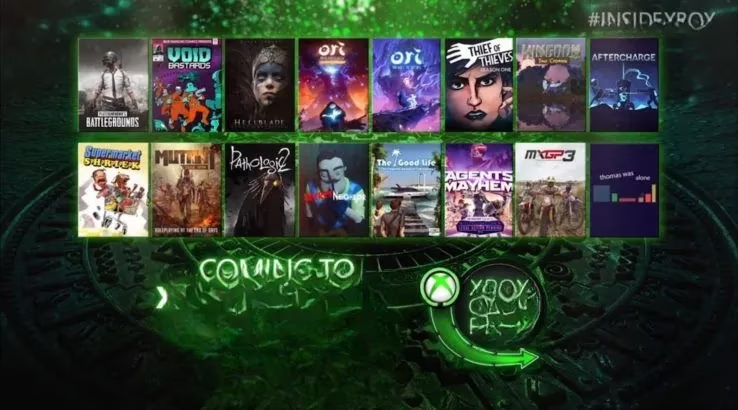
The list extended far beyond these headliners, offering a rich tapestry of experiences:
-
Agents of Mayhem brought over-the-top, open-world mayhem.
-
Mutant Year Zero: Road to Eden offered a unique blend of tactical combat and real-time stealth in a post-apocalyptic world.
-
Secret Neighbor injected social deception and horror into the Hello Neighbor universe.
-
Void Bastards presented a strategic, comic-book styled shooter with roguelike elements.
-
Thomas Was Alone delivered a minimalist yet profoundly charming puzzle-platformer narrative.
This carefully curated selection ensured there was something for everyone, from strategy aficionados and puzzle lovers to fans of chaotic action and thoughtful narratives. The variety was the true selling point, proving that Game Pass was not just about a few big names but about building a comprehensive gaming ecosystem.
Beyond the games, Microsoft also unveiled the Xbox Game Pass mobile app, a feature whose importance has only grown with time. This tool liberated players from their consoles, allowing them to browse the entire library, read about games, and—most crucially—remotely queue up downloads. The convenience of preparing your console for a gaming session while away from home transformed the user experience. It was a forward-thinking addition that acknowledged the mobile-centric lifestyle of modern gamers and seamlessly integrated Game Pass into it.
Reflecting from 2026, that period was a cornerstone. It showcased a blueprint of aggressive content acquisition, strategic first-party integration, and user-centric feature development. The service has evolved dramatically, with day-one releases of massive titles, cloud gaming integration, and an ever-expanding global library, but the core philosophy demonstrated then remains: providing unparalleled value and choice to gamers worldwide. The initial $1 trial and promotional discounts were just the beginning of a journey to make gaming more accessible, a mission that continues to define the industry today. 🎮✨