I logged into PUBG: BATTLEGROUNDS last Wednesday expecting the usual chaos. Hot drops, panicked looting, and the distant crack of a Kar98k. But something felt different. The gunfights were cleaner, the death cams less suspicious. It wasn’t just a lucky streak. I later found out why: the Anti-Cheat Team had just dropped their weekly hammer, and the banned players list for March 9 to March 15, 2026 was brutal.
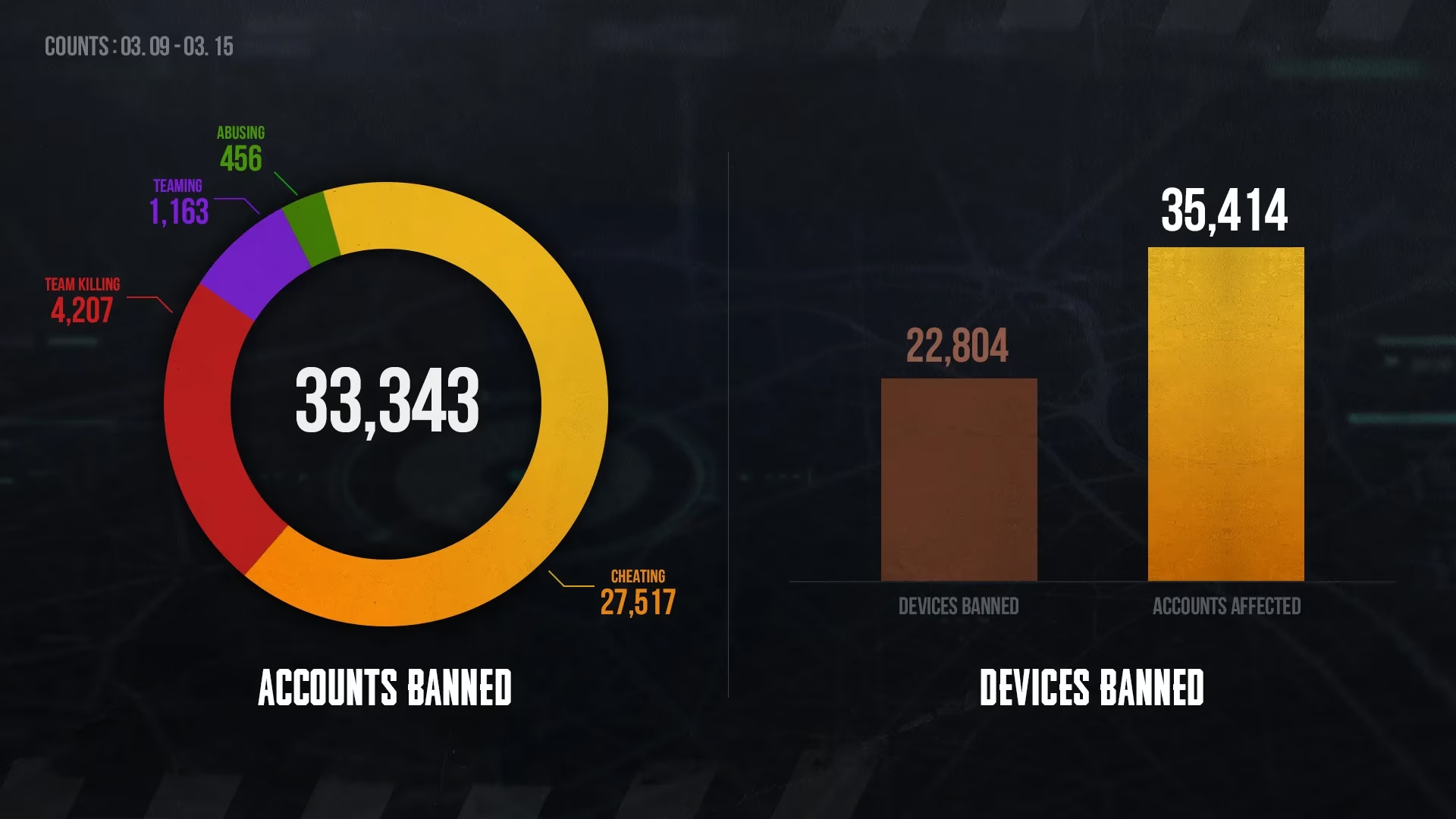
I’ve been playing since early access, so I’ve seen it all—speed hacks, flying cars, aimbots that snap heads through eight layers of concrete. Nothing ruins the adrenaline rush of a top-10 situation like a cheater teleporting behind you and one-pumping you with a P92. It’s infuriating. But let me ask you: have you ever stopped to wonder what actually happens to those accounts once you hit the report button? This week, I got my answer.
A friend of mine—let’s call him Jake—had been complaining nonstop about his sudden “bad luck.” His stats skyrocketed a month ago, and he just smirked when I questioned his miraculous improvement. Fast forward to Sunday, and he was frantically messaging me. His permanent ban had just been confirmed. His nickname, formerly something like “UltraKiller99,” was now listed as “***raKiller99” on the official report. Seeing those asterisks made it real. Jake learned the hard way that the investigation period wasn’t just a formality; it was a sweep that caught him red-handed.
That made me dig deeper into the list. Looking at it, you see patterns. The majority of banned accounts don’t belong to innocent victims; they were deliberately exploiting illegal software. And the nicknames—some are laughable attempts at disguising cheat usage, others are stolen or sold accounts that the original owner probably never imagined would end up permanently locked. It raises a serious question: If you’re not using Steam Guard Mobile Authenticator, are you really safe? I used to think my password was enough. Jake thought so too, until someone in a different country logged into his account, ran rage hacks for three days, and got the permaban hammer while he was offline on a fishing trip.
The Anti-Cheat Team’s statement this week emphasized exactly that. They urged us to sign up for the Steam Guard Mobile Authenticator to prevent our “valuable accounts” from being abused. I honestly hadn’t bothered until I saw Jake’s meltdown. Setting it up was a five-minute process, and now my phone gives me a code every time I log in. It’s a tiny inconvenience compared to losing years of progress, skins, and memories. Let’s be real: how many of us have rare cosmetics or ranked rewards we’d be devastated to lose? I still rock my 2023 PGC jacket in-game, and the thought of someone else getting it banned makes my blood boil.
But back to the ban list itself. I spent an evening scrolling through the redacted nicknames and found a sort of grim satisfaction. These aren’t just names—they represent hours of frustration saved for honest players like me. The fact that the investigation covered March 9 to March 15 shows PUBG’s commitment to steady, relentless enforcement. It’s not a one-off PR stunt. Week after week, they’re pulling weeds from the garden. I even recognized a pattern: right after a major update or a tournament, the ban lists seem to swell. Probably because cheat developers scramble to circumvent new detection methods, and some fools immediately jump on the latest zombie grind using unauthorized tools.
I kept asking myself: Is it enough? With every ban wave, a few more cheaters slide into the queue. But the list is evidence that the system does work, albeit not instantly. My own reports from the previous month led to three confirmations. That’s three fewer aimbotters ruining sessions on Erangel. Small victories matter. And the transparency of publishing the list, even with asterisks, acts as a public shaming mechanism. No one wants to see their disguised name broadcasted as a cautionary tale.
Now, I’m no saint. I’ve been toxic in voice chat once or twice after being Kar98ed from 400 meters by a player with zero recoil. But misconduct reports are taken just as seriously. The announcement reminded us that griefing, teamkilling, and verbal abuse also lead to bans. So I’ve been keeping my anger in check. The battlefield is more fun when you focus on outsmarting enemies rather than swearing at them.
Looking at the bigger picture, the Anti-Cheat Team’s message ends with a note that “we highly value your interest and opinions.” Do they actually listen? I’d like to think so. Every time I submit a detailed report with video evidence via PUBG Support, I get a response. It’s not just a black hole. And the weekly ban lists prove they’re acting. I’ve started encouraging my squadmates to record their death cams. If you see something impossible—a crossbow headshot from 500 meters, a recoilless full-auto spray moving at full speed—clip it. Your report might turn into another asterisked nickname on a future list.
Ultimately, this week’s ban list renewed my faith. Not just in the developers, but in the community that sticks with the game despite the cheater plague. If you’re fed up with unfair deaths, don’t just rage-quit. Be part of the solution: enable Steam Guard, report suspicious players through in-game tools, and let the Anti-Cheat Team do their grim but necessary work. Because when I dropped into my next match after reading the list, I actually enjoyed a fair gunfight. And that, my friends, is worth fighting for.
Remember, the banned players list only shows permanent bans, and the first three letters are always redacted. So if you ever wonder whether your report made a difference, just imagine that one of those hidden nicknames used to be the guy who ruined your chicken dinner. They’re gone now. And with a little patience and vigilance, even more will disappear next week.