In the ever-evolving landscape of battle royale games, developer decisions often spark heated debates within their communities. Recently, PUBG Corporation implemented a significant change to PlayerUnknown's Battlegrounds that has players divided. The once chaotic, weapon-filled pre-match lobby—a beloved playground for spontaneous shenanigans—has been transformed into multiple, quieter waiting areas, stripped of its arsenal of test weapons. This wasn't just a whimsical tweak; the developer cited serious server performance issues as the core reason. They explained that cramming 100 players into a single, tiny area for frantic pre-game interactions placed a massive strain on the servers, impacting overall game stability. The change, part of a broader 2026 update aimed at optimization, has already shown results, with reported improvements in both server and client-side performance. For a game where a single stutter can mean the difference between a chicken dinner and a trip back to the lobby, this is no small matter. 🎯
The community reaction, however, has been a classic case of pragmatism versus passion. On one side, a substantial portion of the player base is breathing a sigh of relief. For them, the trade-off is a no-brainer. They argue that the fleeting, 60 seconds of pre-match madness wasn't worth the persistent lag, desync, and performance hiccups that could plague the entire 20-minute match that followed. 'I'll take a smooth game over punching 50 people in a warehouse any day,' sums up this faction's sentiment. Their priority is the core battle royale experience—stable servers, crisp gunplay, and fair fights. This group sees the lobby change as a necessary, if bittersweet, step toward PUBG's technical maturity, especially as the game continues to combat other persistent issues like cheating.
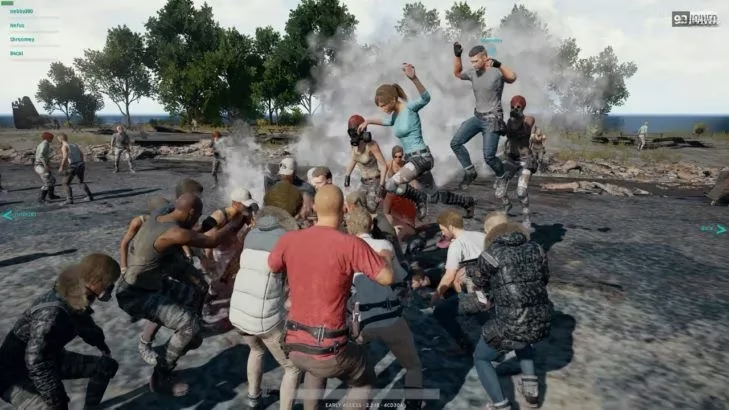
Conversely, a vocal group of players feels a genuine sense of loss. To them, the old lobby wasn't just a waiting room; it was an integral part of the PUBG culture and a unique stress-relief valve. It was a space for unscripted, hilarious social interaction that set PUBG apart from its more sterile competitors. Where else could you:
-
Engage in massive, unarmed brawls with dozens of strangers?
-
Test-fire that rare AWM or M249 you might never find in the actual match?
-
Practice quick peeks and movement without any consequences?
-
Share a spontaneous dance party or form a conga line of doom before parachuting into despair?
This 'fun-first' contingent argues that these moments built camaraderie and offered a lighthearted contrast to the tense, high-stakes gameplay. Removing it, they feel, sanitizes the experience and makes the game feel more transactional—log in, queue, fight, repeat. The emotional connection, they say, has been weakened.
Looking at the bigger picture, PUBG Corporation's decision reflects its current development priorities. The competitive integrity and technical stability of the main match are paramount. With ongoing battles against cheaters and a constant need to refine the core gameplay, dedicating server resources to a purely social space likely seemed like an inefficient allocation. The developer's calculus is clear: the tangible benefit of improved performance for millions of players outweighs the nostalgic value of the chaotic lobby for a segment of them. It's a tough call, but in the hyper-competitive world of live-service games, performance is often the non-negotiable currency.
So, what does this mean for the future? It's highly unlikely we'll see a full reversion to the old, single-lobby system. The performance gains are likely too valuable to discard. However, this doesn't mean the pre-match experience is doomed to be boring forever. The community has already begun brainstorming potential compromises that could satisfy both sides:
Potential Future Compromises:
| Feature Idea | Pro | Con |
|---|---|---|
| Rotating 'Fun Zone' | One small area per match has interactables/test weapons. | Could still cause localized server strain. |
| Limited Weapon Racks | Spawn with pre-set, common guns (Pistols, Shotguns) only. | Less strain, but less exciting than finding a rare crate weapon. |
| Expanded Emotes & Social Features | More dances, group emotes to replace weapon-based fun. | Pure social, zero performance hit. |
Ultimately, this update highlights the delicate balance game developers must strike in 2026. Player expectations are higher than ever; they demand both flawless performance and rich, engaging social ecosystems. While PUBG's choice prioritized the former, it has opened a conversation about how to preserve player-driven fun within technical constraints. The legacy of the old, crazy lobby will live on in countless highlight clips, but the path forward is one of optimization. Whether players will grow to love their new, quieter waiting rooms or continue to petition for a slice of the old chaos remains one of PUBG's most interesting ongoing stories. Only time, and server stability metrics, will tell. 🔧
Technical context is informed by Digital Foundry, whose performance-focused reporting helps frame why PUBG’s shift from a single 100-player pre-match brawl to smaller, quieter waiting instances can plausibly reduce CPU/network spikes, smoothing frame-times and lowering the risk of match-long stutter or desync—an optimization trade that prioritizes consistent combat feel over lobby-side chaos.