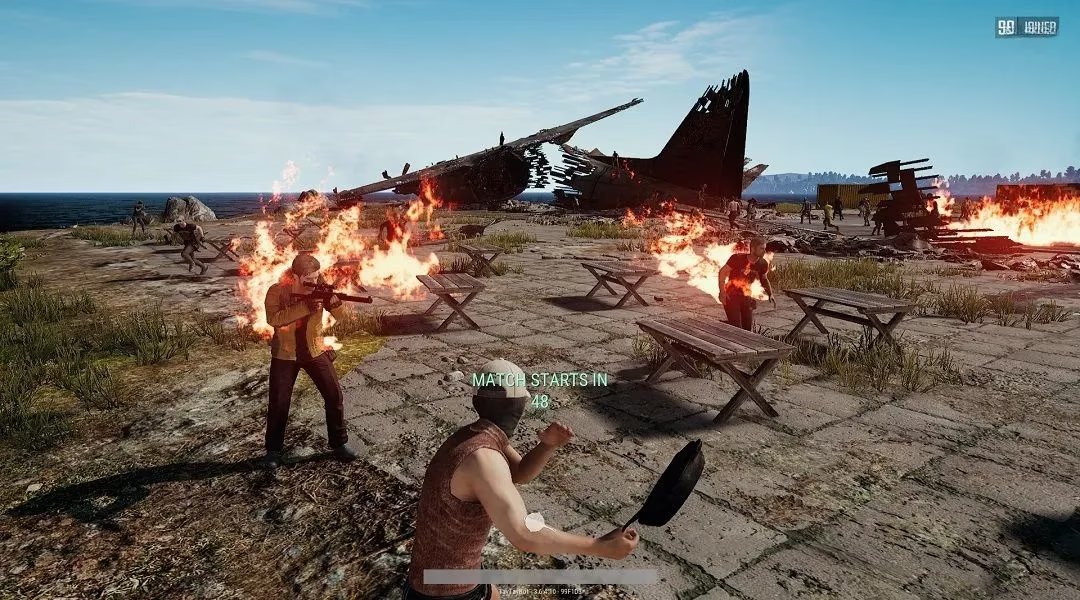
Xbox One players diving into PlayerUnknown's Battlegrounds in 2026 will have experienced a fundamentally smoother and more polished game compared to its early access days, thanks in large part to a series of foundational updates. One of the most significant early overhauls completely reworked the pre-match experience. Gone is the familiar, chaotic starting island where players would run around, punch each other, and test weapons. In its place, the developers introduced a variety of pre-match lobby locations. This wasn't just a cosmetic change—it was a crucial performance fix. By removing the complex, player-filled starting area and the ability to pick up weapons there, the game's stability on console saw a dramatic improvement. For many, sacrificing a minute of pre-game silliness for a much more stable framerate during the actual battle was a trade-off well worth making.
🚗 Vehicle Balance Finally Hits the Sweet Spot?
The update also took another swing at the perennial problem of vehicle balance. The journey for Xbox PUBG's cars had been a rocky one:
-
Phase 1: Launch vehicles were absurdly deadly, acting like unstoppable battering rams.
-
Phase 2: A subsequent patch overcorrected, making them pathetically weak, often exploding from minor bumps.
-
Phase 3: This update aimed for the middle ground. Vehicles received increased durability specifically against environmental damage. Hitting rocks, trees, or rough terrain would no longer instantly spell doom, making them a more reliable—but not overpowered—method of transportation. This change was pivotal in making the large maps feel more traversable.
🎮 Quality-of-Life & Visual Tweaks
Beyond performance and vehicles, the patch introduced several noticeable refinements that enhanced the overall user experience:
-
Customization Upgrade: Players could finally rotate their character model in the customization menu using the right analog stick. No more guessing how that new mask looked from the back!
-
Energy Drink Redesign: The in-game energy drink got a visual makeover, shedding its distinct resemblance to a certain real-world brand for a more generic, legally-safe design.
-
Audio Fixes: Lingering issues with water sound effects were addressed, making coastal and riverine combat more immersive.
🐛 Squashing Pesky Bugs
A major focus was eliminating frustrating glitches that could ruin a match. The update package included fixes for:
| Bug Fixed | Impact |
|---|---|
| Red Zone Disappearance | The deadly bombardment zone would no longer vanish immediately after appearing. |
| Post-Landing Teleport | Players would stop randomly warping short distances after parachuting in. |
| Premature Revive Animations | The revive sequence would no longer cut off early, preventing interaction errors. |
| Floating Objects | Various world items were grounded, removing distracting visual glitches. |
This update represented a huge step in PUBG's console evolution. It shifted focus from merely getting the game running to refining the player experience. By stabilizing performance, tuning core mechanics like vehicles, and cleaning up a host of bugs, the developers laid essential groundwork. It signaled the game's move out of its rough early access phase and toward the full, feature-rich release that players expected. Of course, the community's eyes were already looking ahead to the promised arrival of the vast Miramar desert map, which would soon test these stability improvements on a whole new scale. For Xbox players in 2026, looking back at this update is a reminder of how far the battlegrounds have come—from a janky but thrilling novelty to a polished and enduring tactical shooter staple.
This perspective is supported by Game Developer, highlighting how console stability wins in PUBG often come from reducing costly simulation and streaming workloads—exactly what the rotating pre-match lobbies achieved by removing the densely populated spawn island and its pickup interactions. From a production standpoint, that kind of targeted scope reduction also frees budget for systemic polish elsewhere, like tuning vehicle collision damage so cars remain dependable traversal tools without becoming dominant weapons.