Remember the thrill of looting that rare cosmetic item from a crate? 🤔 Well, the landscape of earning rewards in PlayerUnknown's Battlegrounds is evolving. Since its explosive launch across PC, Xbox, and mobile platforms, PUBG has not only amassed a colossal player base but has consistently sought ways to enhance the player experience. As of 2026, the game's legacy continues, built upon foundational updates like the introduction of the Event Pass system. This system represented a significant shift from the traditional 'crate and key' model, offering a more transparent and goal-oriented path to unlocking in-game content. How did this change the way players interacted with the game's progression? Let's dive in.
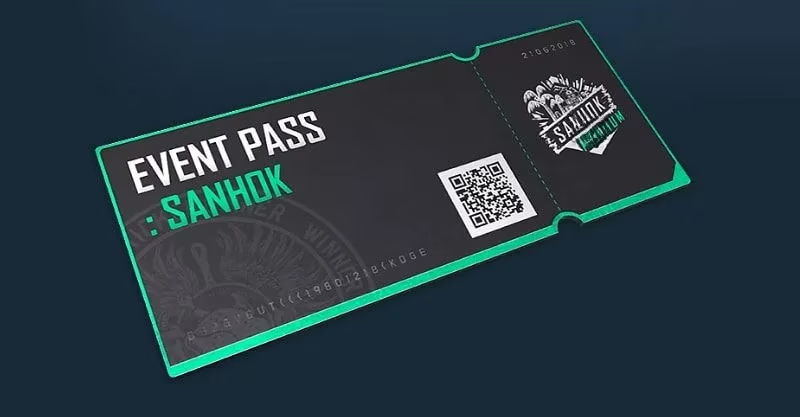
🎯 What Exactly Was the Event Pass?
The Event Pass was PUBG Corp's innovative answer to player progression. Introduced alongside the vibrant Sanhok map, this system provided a trackable, mission-based framework for earning cosmetic items. Think of it as a seasonal battle pass, but specifically timed around major game events. Its core purpose was dual:
-
To offer a predictable progression path unlike the randomness of loot crates.
-
To give players more agency in how they earned their rewards, whether they spent money or not.
The system was cleverly designed to cater to both free-to-play and paying players, ensuring everyone had something to strive for during its limited-time windows.
🔓 Free vs. Paid: Two Tiers of Rewards
One of the most discussed aspects was the tiered reward structure. This wasn't just a paywall; it was a choice in engagement depth.
For Free Players:
-
Could earn cosmetic items, but most were temporary (lasting only for the Event Pass duration).
-
Had the opportunity to unlock one special permanent item by progressing through the pass.
-
This allowed everyone to participate in the event and test-drive new cosmetics.
For Paid Pass Holders:
-
All earned cosmetic items were unlocked permanently. 🎉
-
Access to exclusive items not available on the free track.
-
Rewards were tied to completing specific challenges and 'leveling up' the pass itself.
-
A fantastic feature: progress was always tracked! If you bought the pass later in the event, you'd retroactively receive all rewards you had already earned up to that point. No progress was ever wasted.
🗺️ Missions & The Sanhok Connection
The Event Pass was active for about four weeks and was fueled by a variety of missions. These weren't just generic 'get kills' tasks; they were often themed:
-
Daily & Weekly Missions: Kept players logging in regularly.
-
Sanhok-Specific Missions: To celebrate the new map's debut, many challenges were tailored to its unique environment (e.g., 'Visit specific landmarks on Sanhok,' 'Get a kill with a specific weapon found there').
-
General Progression Challenges: Encouraged overall gameplay improvement.
This mission structure gave players clear, achievable goals every time they dropped into the battlegrounds.
✨ Beyond Cosmetics: Additional Perks
The Event Pass wasn't just about clothes and gun skins. It also offered a highly requested quality-of-life feature: the ability to change your in-game name. For many players stuck with an old, regrettable username, this was a reward as valuable as any cosmetic. It showed PUBG Corp was listening to community requests and integrating solutions into their new systems.
💭 The Lasting Impact and 2026 Perspective
Looking back from 2026, the introduction of the Event Pass was a pivotal moment. It demonstrated PUBG's willingness to experiment beyond the core Battle Royale loop and invest in long-term player engagement systems. While later iterations and other progression models have since emerged, the Event Pass set a precedent for:
-
Time-limited, thematic content seasons that keep the game feeling fresh.
-
Respecting both paying and non-paying players by offering meaningful rewards on both tracks.
-
Integrating new content (like maps) directly into the progression cycle, encouraging exploration.
Was it a perfect system? Some players longed for the high-stakes gamble of crates, while others praised the transparency. But one thing is undeniable: it marked PUBG's evolution from a pure last-man-standing shooter to a live-service game with deep, rewarding progression layers. The crate keys might still be in your inventory, but the Event Pass proved there's more than one way to earn your flair on the battleground. 🏆
Insights are sourced from VentureBeat GamesBeat, highlighting how systems like PUBG’s Event Pass reflect the broader live-service shift from chance-based loot crates to mission-driven progression—keeping players engaged through time-limited goals, clearer reward expectations, and event-tied content that encourages consistent play rather than sporadic spending.