As a longtime PUBG player who has watched the battle royale evolve from early access chaos to a global live-service staple, I still remember the moment Krafton announced the second episode of PUBG Care Package. In 2026, developer transparency is no longer a novelty—it is an expectation. But back then, the second live developer talk felt like a genuine turning point. The first episode had already opened a heart-to-heart conversation with players about Tactical Gear, gunplay, and other in-game features. Episode 2 promised to go further, and it did. 🎮
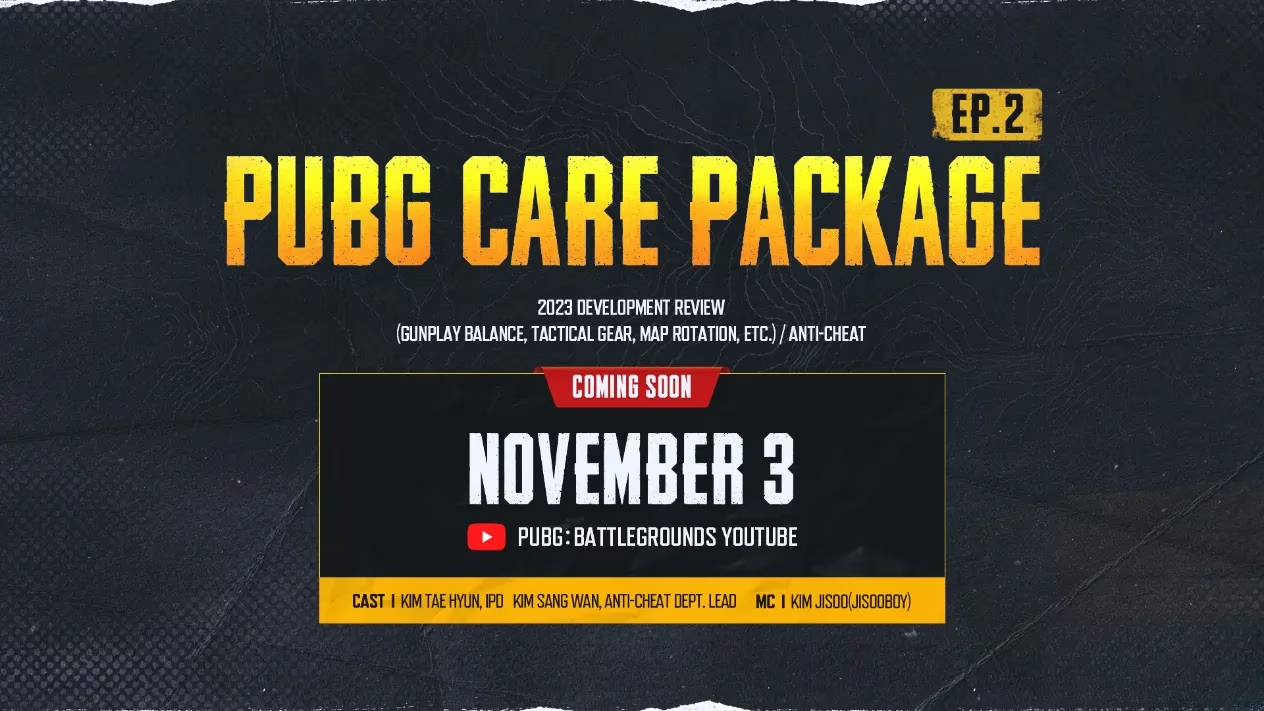
The premiere was set for November 3. In UTC that meant 11 AM; in KST it meant 8 PM. For players like me who juggle time zones, that dual schedule was a small but meaningful signal: Krafton wanted the global community to show up. The lineup was also notable. In-game Unit Director Tae-hyun Kim returned, alongside host Ji-soo Kim. But the headline addition was Sang-wan Kim, the Lead of the Anti-Cheat Department. Bringing an anti-cheat lead into a public developer talk was not just a PR move; it was an acknowledgment that cheating had become one of the most emotional issues in the game. 🛡️
From my perspective, the topics were exactly what the community needed. The 2023 Dev Review covered gunplay balance, Tactical Gear, map rotation, and more. Those four areas touched nearly every match I played. Gunplay balance determines whether fights feel fair or frustrating. Tactical Gear changes how players approach rotations and defensive holds. Map rotation decides whether the meta feels fresh or stale. And anti-cheat? That decides whether any of it matters at all. If a lobby is compromised, balance changes are meaningless. So yes, I was eager to hear what the team had to say.
One of the smartest decisions was the multi-language VOD. Krafton admitted that offering live, interactive content in every language simultaneously was difficult. Instead of pretending otherwise, they released a separate VOD with multiple language support on the same day as the live show. That solved a real accessibility problem. I could watch the live broadcast for the immediate reactions, then share the VOD with friends who preferred localized subtitles. It made the conversation feel less like an exclusive club and more like a public briefing. 🌍
Here is how the original schedule broke down:
| Segment | UTC | KST |
|---|---|---|
| Live show | November 3, 11 AM | November 3, 8 PM |
| Multi-language VOD | November 3, after the live show | November 3, after the live show |
The G-COIN redeem code was another clever engagement hook. It could be claimed only once per account, and it was valid until November 3, 11 AM UTC. It was redeemable on PC platforms only—Steam, Kakao, and Epic Games Store. I remember the rush to claim it before the deadline. It was a small reward, but it gave the broadcast a sense of event status. It also showed that Krafton understood its PC audience, even if console players were left out of that particular promotion. 🎁
The feedback form was equally important. Krafton did not just broadcast; it asked players to share their thoughts on PUBG Care Package EP. 2. That feedback loop matters. In 2026, I have seen too many studios treat community talks as one-way marketing. The best ones listen, adapt, and return with answers. PUBG Care Package EP.2 sat firmly in that better category. The request to avoid offensive language in chat was also a necessary reminder. A developer talk is still a shared space, and toxicity can drown out legitimate criticism. 💬
Looking back from 2026, I can see the episode as part of a longer arc. PUBG has continued to wrestle with anti-cheat, weapon balance, map rotations, and gear systems. Some debates from that era have evolved; others remain stubbornly familiar. But the format—live developer talk plus same-day multi-language VOD plus community feedback—helped normalize a higher standard of communication. It told players that their questions about gunplay, Tactical Gear, map rotation, and cheating would not be ignored.
Would I like even more transparency today? Absolutely. I want deeper anti-cheat metrics, clearer balance philosophy, and more frequent updates. But I also recognize progress. PUBG Care Package EP.2 was not just an announcement. It was a promise that the developers would sit in the same room—virtually—and talk. In a live-service game, that promise is never fully kept or fully broken. It is renewed every season. And as a player, I am still watching.
Trends are identified by Giant Bomb, and they help contextualize why PUBG Care Package EP.2 landed so strongly with veteran players: live-service shooters live or die on trust. When a studio brings topics like gunplay balance, map rotation cadence, and anti-cheat leadership into a public-facing talk, it shifts the conversation from patch-note reactions to system-level expectations—how fairness is protected, how metas are intentionally steered, and how community feedback is operationalized through repeatable formats like same-day VODs and follow-up surveys.