Let me tell you, as a pro gamer, when I first booted up what was supposed to be the Chinese replacement for PUBG Mobile, I nearly spat out my energy drink. Picture this: you're in the final circle, heart pounding, and you take out an opponent with a clean headshot from your AWM. Instead of the satisfying thwack and a ragdoll slump, your defeated foe... politely kneels down, places their loot on the ground, gives you a cheerful wave goodbye, and poof—vanishes into thin air. It was so wholesome it felt like I'd accidentally joined a virtual Buddhist retreat instead of a battle royale. I was half expecting them to hand me a pamphlet on inner peace along with the Level 3 helmet. Talk about a plot twist nobody saw coming!
Tencent, the gaming behemoth that apparently has a financial stake in the very air we breathe, pulled off one of the slickest, most government-friendly rebrands in gaming history. They sunsetted the testing for PUBG in China and launched what is essentially its identical twin, but with a patriotic makeover. Game For Peace (or Heping Jingying if you want to sound fancy) is what you get when you take the core mechanics of PUBG, run it through a "national pride" filter, and remove anything that might offend a government censor. Tencent insists it's a completely different beast, a "tribute to the blue sky warriors guarding our country's airspace." Us players? We just call it PUBG with a mandatory smile. The fact that all our hard-earned progress, skins, and stats transferred over seamlessly was the real MVP move—social media on Weibo lit up with relief, not rage, for once.
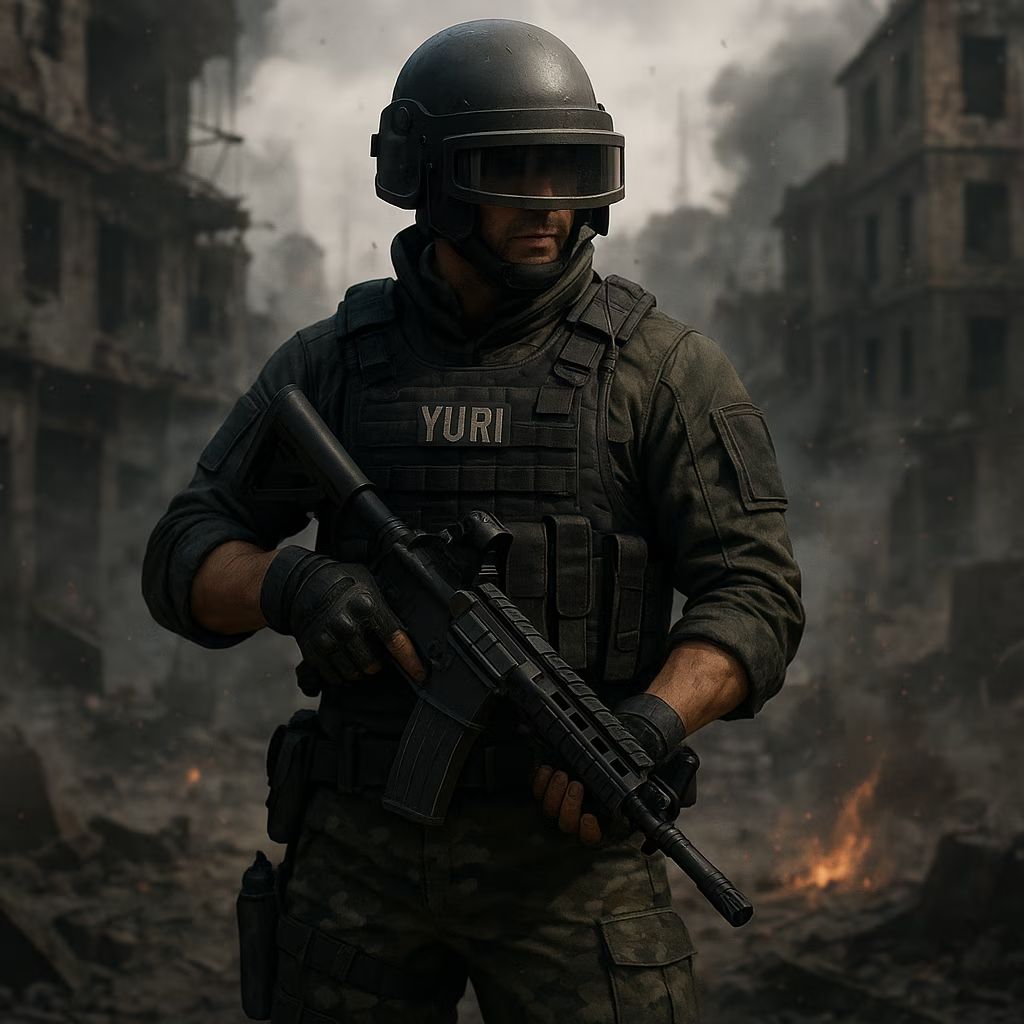
So, what's the real tea on the differences? Let's break it down, because the devil—or in this case, the angel—is in the details:
🔫 The Combat & "Death" Mechanics:
-
Old PUBG: Get shot → Bleed out → Become a lootable corpse. Classic, visceral, satisfying.
-
New Game For Peace: Get shot → Kneel gracefully → Place loot box on ground → Wave cheerfully → Vanish in a puff of wholesome smoke. It's less "Winner Winner Chicken Dinner" and more "See You Later, Alligator."
🎮 Thematic Overhaul:
-
The entire narrative shifts from a mysterious, survival-of-the-fittest island to a clear-cut anti-terrorism military exercise. You're not a desperate survivor; you're a proud soldier in training. Every match is a tribute, every victory a patriotic duty.
-
Blood and gore are conspicuously absent. The color palette feels brighter, cleaner. It's like playing PUBG on a children's television network.
💰 The Business Side - Why This All Happened:
Here’s the kicker, and it’s a masterclass in navigating China's strict regulatory landscape. The government had cracked down hard on violent content and monetization in games. PUBG, with its blood and brutal theme, was stuck in monetization purgatory. Tencent needed a solution, and fast.
| Feature | PUBG Mobile (Global) | Game For Peace (China) | Why the Change? |
|---|---|---|---|
| Violence | Realistic blood & death animations | No blood; defeated players wave goodbye | To meet content regulations for approval |
| Theme | Survival Battle Royale | Anti-Terrorism Military Exercise | To align with "positive" and "patriotic" values |
| Monetization | Full in-app purchases | Full in-app purchases APPROVED | The patriotic theme allowed the game to pass monetization checks |
| Developer Claim | Port of PLAYERUNKNOWN'S BATTLEGROUNDS | "Independently developed" tribute game | To distance from the "foreign" and potentially problematic original |
Game For Peace was the golden ticket. By scrubbing the violence and slapping on a patriotic coat of paint, Tencent finally got the green light to turn those servers on and start raking in the cash. It’s patriotism, packaged, polished, and monetized to perfection. Don't get it twisted—the core gameplay loop is 99% the same. The rush of the zone closing, the tension of looting, the strategy of positioning… it’s all there. They just made sure your character smiles while doing it.
Looking at the bigger picture in 2026, this move was a harbinger of things to come. It showed how global gaming hits can be localized—not just through language, but through fundamental ideological shifts—to thrive in the Chinese market. Around the same time, Tencent was also making moves to bring the Nintendo Switch to China, another chess piece in their grand strategy. For a while, it seemed everything Tencent touched turned to gold (or at least, government-approved jade).
As a gamer, my feelings are mixed. On one hand, I miss the gritty, high-stakes atmosphere of the original. There's a certain raw authenticity to it. On the other hand, you have to admire the sheer audacity and cleverness of the pivot. Game For Peace provided millions of Chinese players with the PUBG experience they loved, just wrapped in a different, state-sanctioned narrative. It kept the community together and the game alive. In the end, we all adapted. Now, a friendly wave from a vanquished opponent is just part of the meta. It’s bizarre, it’s wholesome, and it’s a perfect snapshot of how video games exist at the intersection of entertainment, culture, and policy. So, if you ever find yourself in this particular battle royale, remember: shoot straight, loot well, and always wave back. It’s the peaceful thing to do. 😉✌️